How to Measure the Dimensions of a Paper Packaging Box
As a supplier of paper packaging boxes, I understand the crucial role that accurate measurements play in the packaging industry. Whether you're shipping products, storing items, or presenting your goods in an appealing way, getting the dimensions of your paper packaging box right is essential. In this blog post, I'll share some practical tips on how to measure the dimensions of a paper packaging box effectively.


Why Accurate Measurements Matter
Before we dive into the measurement process, let's briefly discuss why accurate measurements are so important. Firstly, proper measurements ensure that your products fit snugly inside the box, reducing the risk of damage during transit. A box that is too large can allow the contents to shift around, while a box that is too small may not close properly or could cause the product to be squeezed. Secondly, accurate dimensions are necessary for calculating shipping costs. Shipping carriers often base their fees on the size and weight of the package, so having precise measurements can help you avoid overpaying. Finally, well-measured boxes contribute to a professional and consistent appearance, which can enhance your brand image.
Tools You'll Need
To measure a paper packaging box, you'll need a few basic tools:
- A ruler or measuring tape: A flexible measuring tape is ideal for measuring irregularly shaped boxes, while a rigid ruler is better for straight edges.
- A pen or pencil: To mark the measurements on the box.
- A flat surface: To ensure accurate measurements, place the box on a flat and level surface.
Measuring the Length, Width, and Height
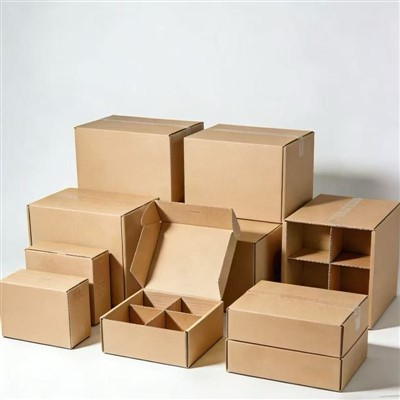
The three main dimensions of a paper packaging box are length, width, and height. Here's how to measure each one:
- Length: The length is the longest side of the box. Place the ruler or measuring tape along the longest edge of the box, starting from one end and extending to the other. Make sure the ruler is straight and parallel to the edge of the box. Mark the measurement with a pen or pencil.
- Width: The width is the shorter side of the box. Measure the width in the same way as the length, placing the ruler or measuring tape along the shorter edge of the box. Mark the measurement.
- Height: The height is the distance from the bottom to the top of the box. Measure the height by placing the ruler or measuring tape vertically along the side of the box. Mark the measurement.
It's important to measure the dimensions of the box at its outer edges, including any flaps or folds. This will give you the overall size of the box, which is necessary for determining the correct shipping dimensions and ensuring a proper fit for your products.
Measuring the Inner Dimensions
In addition to the outer dimensions, you may also need to measure the inner dimensions of the box. This is especially important if you're using the box to hold specific products. To measure the inner dimensions, simply subtract the thickness of the box walls from the outer dimensions. For example, if the outer length of the box is 10 inches and the wall thickness is 0.25 inches, the inner length would be 9.5 inches.
Measuring the Flaps
If your paper packaging box has flaps, you'll need to measure them as well. The flaps are the parts of the box that fold over to close the box. To measure the flaps, open the box and lay it flat. Measure the length and width of each flap, starting from the edge of the box to the end of the flap. Mark the measurements.
Special Considerations
When measuring a paper packaging box, there are a few special considerations to keep in mind:
- Rounded edges: If the box has rounded edges, measure the straight part of the edge and add a small amount to account for the curvature.
- Irregular shapes: If the box has an irregular shape, measure the longest and widest points of the box to get the overall dimensions.
- Multiple layers: If the box has multiple layers of paper or cardboard, measure the thickness of each layer and add them together to get the total thickness.
Using the Measurements
Once you have measured the dimensions of the paper packaging box, you can use them for a variety of purposes. Here are some common uses:
- Shipping: Use the dimensions to calculate the shipping costs and determine the appropriate shipping method.
- Product fit: Ensure that your products fit snugly inside the box by comparing the inner dimensions of the box to the dimensions of the products.
- Design and printing: Use the dimensions to create a custom design for the box or to print labels and graphics.
Conclusion
Measuring the dimensions of a paper packaging box is a simple but important task. By following the tips outlined in this blog post, you can ensure that your boxes are accurately measured and that your products are properly protected during transit. If you have any questions or need further assistance with measuring your paper packaging boxes, please don't hesitate to [contact us for a free consultation]. We're here to help you find the perfect packaging solution for your needs.
As a leading supplier of paper packaging boxes, we offer a wide range of products to meet your specific requirements. Whether you need a Paper Product Packaging Box, a Corrugated Paper Carton, or a Printed Packaging Box, we have the expertise and resources to provide you with high-quality packaging solutions.
If you're interested in learning more about our products or would like to discuss your packaging needs, please [contact us today]. We look forward to working with you!
References
- Packaging Machinery Manufacturers Institute. (n.d.). Measuring Your Box. Retrieved from https://www.packagingmachinery.org/resources/measuring-your-box
- International Safe Transit Association. (n.d.). Packaging Design Guidelines. Retrieved from https://www.ista.org/guidelines