

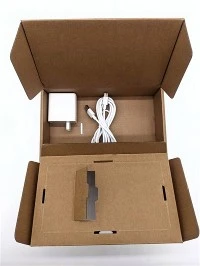

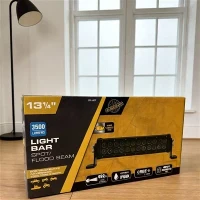

Counter Display Boxes
Counter display boxes serve retail point-of-sale environments by positioning products at eye-level checkout lanes, cash wraps, and counter spaces to stimulate impulse purchases. Fabricated from structural paperboard and corrugated stocks, these point-of-purchase (POP) displays utilize folding cartons or rigid setups with integrated header cards or tiered shelves. Direct factory manufacturing ensures structural load-bearing stability, precise die-cutting tolerances, and uniform folding lines necessary for automated or manual retail assembly.
Key Product Features
Tiered & Open-Access Architecture: Multi-level internal steps and slanted front lips maximize SKU visibility while maintaining structural integrity for heavy merchandise.
Interlocking Base & Lock-Bottom Construction: Bottom flaps utilize auto-lock or 1-2-3 snap-lock configurations to prevent structural sagging under product weight.
Detachable Header Cards: Optional slotted or adhesive-mounted header boards expand vertical branding space for promotional graphics without compromising counter footprint.
Direct Offset & Flexographic Printing: High-resolution CMYK/Pantone printing reproduces vector brand assets, barcodes, and compliance text directly onto linerboards.
Surface Protective Finishes: Matte, gloss, or soft-touch aqueous coatings and anti-scuff films shield exterior panels against retail handling friction and moisture.
Key Specifications
|
Parameter |
Specification Options |
|
Primary Material |
C, B, E, F-flute corrugated board; 300gsm – 450gsm CCNB / SBS duplex board |
|
Dimensions |
Fully customizable to product footprint (standard counter depths: 150mm – 400mm) |
|
Printing Technique |
Offset printing (up to 6 colors), flexographic printing, digital proofing |
|
Surface Treatment |
Gloss/matte lamination, aqueous coating, UV spot coating, foil stamping (gold/silver) |
|
Structural Styles |
Open-front counter tray, tiered display stand, locking lid counter box, header-card display |
|
Load Capacity |
Up to 15 kg depending on flute grade and internal partition reinforcement |
|
Minimum Order Quantity |
Scalable from small-batch custom runs to high-volume mass production (10M+ annual capacity) |
|
Compliance & Standards |
ISO/environmental packaging standards, recyclable paper chain of custody |
Applications
Cosmetics & Personal Care: Lipsticks, foundation bottles, compact mirrors, and skincare trial kits positioned at checkout counters.
Convenience Retail & FMCG: Energy bars, confectionery, gum packs, and pocket-sized impulse goods.
Electronics & Accessories: Mobile phone charging cables, earbuds, adapters, and screen protectors.
Pharmaceuticals & OTC: Vitamin bottles, throat lozenges, and seasonal health products placed near pharmacy cash wraps.
Cultural & Corporate Promotions: Branded giveaway merchandise, keychains, writing instruments, and promotional literature.
Printing & Customization
Production utilizes computer-aided design (CAD) and automated plate-making systems (AI/CDR) coupled with multi-color offset presses and water-ink printing machines. Customization parameters include precise die-cut window patching, custom inner partitioning, reinforced headers, and selective foil stamping or UV varnishing. Color accuracy is managed via standardized digital pre-press workflows to match corporate brand guidelines across batch runs.
Quality Inspection
In-house inspection protocols govern all production stages to maintain a pass rate exceeding 99% and a return rate below 1%. Quality control checkpoints include:
Material Burst & Crush Testing:
Verifying edge crush test (ECT) and flat crush values of incoming corrugated and paperboard stocks.
Dimensional Verification:
Laser-calibrated measurement of die-cutting creases, slot depths, and folding tolerance angles.
Adhesive Bond Integrity:
Peel-strength testing on glued side seams and window-patch films.
Color Consistency Audit:
Spectrophotometer verification against approved digital or physical color proofs.
Manufacturing Process
The production workflow operates within an integrated industrial manufacturing facility spanning prepress engineering to automatic packing:
Prepress & Plate-Making: Digital layout imposition, structural CAD prototyping, and plate output.
Printing: High-speed offset or water-ink flexographic printing onto linerboards.
Lamination & Coating: Application of protective films, gloss/matte lamination, or UV coating layers.
Flute Lamination (Corrugated lines): Combining printed liners with interior fluting media (E, B, or C flutes).
Die-Cutting & Creasing: Precision flatbed die-cutting for external perimeters, fold creases, and hanging tabs.
Window Patching & Gluing: Automatic window film application and side-seam folding/gluing.
Final Assembly & Packing: Flat-packed bundling or pre-assembled nesting stacked into master shipping cartons.
Packaging & Shipping
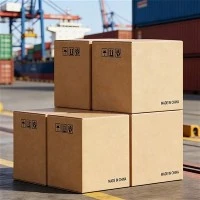
Displays are shipped flat-packed in heavy-duty corrugated master cartons to optimize freight volume and prevent transit warping. Interleaved protective chipboard sheets and moisture-barrier stretch wrapping secure palletized loads for international container transport and domestic distribution across the Yangtze River Delta and export channels.
FAQ
Q: What file formats are required for custom graphic printing?
A: Vector files created in Adobe Illustrator (.ai) or CorelDRAW (.cdr) with outlined fonts and embedded CMYK or Pantone color profiles are required. A 3mm bleed margin must be included on all artwork layouts.
Q: How do counter display boxes ship to minimize freight costs?
A: Units are typically shipped flat-packed (knocked down) to reduce dimensional weight and freight expenses. Pre-glued pop-up designs or interlocking bases allow retail staff to assemble the displays on-site in seconds.
Q: What is the maximum weight capacity these counter displays can support?
A: Load capacity depends on the material grade selected. E-flute and F-flute stocks support lightweight cosmetics and small accessories, while B-flute and C-flute corrugated boards combined with internal dividers support heavier items up to 15 kg without structural buckling.
Q: Can dividers or product trays be integrated inside the box?
A: Yes. Internal grid partitions, stepped shelves, and custom die-cut foam or paper inserts can be engineered into the layout to keep multiple SKUs organized and upright.
Q: How is color consistency maintained across repeat orders?
A: Digital pre-press data, standardized ink formulas, and spectrophotometer color checks are logged for every project to ensure batch-to-batch color repeatability.
Q: What is the typical lead time from sample approval to final delivery?
A: Standard production schedules range from 7 to 15 business days following structural and graphic sample sign-off, depending on order volume and post-processing complexity.
Hot Tags: counter display boxes, China counter display boxes manufacturers, suppliers, factory
Previous
Retail Display BoxesYou Might Also Like



Send Inquiry