




Heavy-Duty Corrugated Cartons
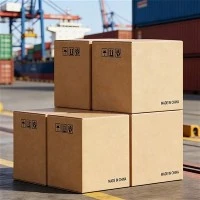
Heavy-duty corrugated cartons are designed for heavy industrial components, dense products, palletized distribution, and export shipping where standard corrugated cartons may not provide sufficient compression and impact resistance. Double-wall constructions such as BC and AB flute and triple-wall constructions such as AAC and AAA flute provide different combinations of board thickness, rigidity, cushioning, and load-bearing capacity.
Typical applications include automotive components, machinery parts, pumps, valves, electric motors, industrial hardware, appliances, and other products requiring reinforced corrugated packaging.
Carton selection should consider packed product weight, carton dimensions, stacking height, pallet configuration, transport conditions, and required board performance rather than relying on flute type alone.
Quick Specification Guide
|
Parameter |
Specification / Option |
|
Construction |
Double wall; triple wall |
|
Double-wall flute |
BC, AB |
|
Triple-wall flute |
AAC, AAA |
|
Approx. board thickness |
BC: 7 mm; triple wall: approximately 15 mm |
|
Stated ECT range |
44–110 lb/in (7.7–19.3 kN/m) |
|
Stated bursting strength |
275–600 psi (1.9–4.1 MPa) |
|
Dimensions |
Custom according to product and packing requirements |
|
Carton styles |
RSC, FOL, telescopic, die-cut |
|
Printing |
Up to 4-color flexographic printing |
|
Internal protection |
Partitions and honeycomb inserts available as specified |
ECT, bursting strength, and board thickness are not interchangeable specifications. Final carton construction should be selected according to the complete packaging and distribution requirements.
Corrugated Construction
Double-Wall Cartons
Double-wall corrugated board contains two fluting layers between three linerboards. BC and AB flute combinations provide increased thickness and compression resistance compared with single-wall board.
BC flute combines B and C flutes, while AB flute combines A and B flutes. The appropriate combination depends on the required balance of rigidity, cushioning, stacking performance, and carton dimensions.
Triple-Wall Cartons
Triple-wall construction contains three fluting layers and provides a thicker corrugated structure for applications requiring higher load-bearing capability.
The supplied specification identifies AAC and AAA flute as triple-wall options, with an approximate overall board thickness of 15 mm. Actual thickness and performance depend on the selected board construction and materials.
Board Materials and Performance
The supplied specifications include virgin kraft linerboard and wet-strength-treated kraft as material options.
Wet-strength-treated linerboard can be considered for applications where exposure to humidity or moisture may affect corrugated board performance. Moisture resistance does not make a corrugated carton waterproof, so the expected storage and transport environment should be considered when selecting the board structure.
Key Performance Tests
• Edge Crush Test (ECT): Measures the edgewise compression resistance of corrugated board and is important for evaluating stacking performance.
• Bursting Strength: Measures the pressure required to rupture the board and provides an indication of resistance to bursting and puncture.
• Box Compression Test (BCT): Evaluates the compression resistance of a fully assembled carton under a controlled load.
• Cobb Water Absorption Test: Measures the amount of water absorbed by the paper surface during a specified test period.
• Drop Testing: Evaluates carton integrity and product protection under defined free-fall impact conditions.
For palletized distribution, ECT should be considered together with carton dimensions, packed weight, stacking height, pallet pattern, and storage conditions.
Carton Styles and Structural Options
Heavy-duty corrugated cartons can be configured according to product geometry and loading requirements.
Regular Slotted Container (RSC): A practical format for general industrial shipping and palletized distribution.
Full Overlap Slotted Container (FOL): Uses overlapping flaps to provide additional board coverage on the top and bottom panels.
Telescopic Cartons: Separate body and lid sections accommodate products requiring specific height or access arrangements.
Die-Cut Cartons: Suitable for specialized product shapes and applications requiring defined folds, slots, or internal retention.
Internal Partitions: Separate individual components and reduce contact between products.
Honeycomb Inserts: Provide additional internal support where the product requires greater separation or cushioning.
Carton dimensions can be customized to the product footprint. Product dimensions, weight, orientation, and packing quantity should be considered together when developing the carton structure.
Printing and Identification
Flexographic printing can be used for functional and identification information, including:
• Product or shipment identification
• Barcodes and tracking information
• Handling symbols
• Fragile and moisture-related markings
• Orientation instructions such as "This Side Up"
Printing specifications should be confirmed according to the final carton design, artwork, and identification requirements.
Applications
Heavy-duty corrugated cartons are suitable for packaging and transporting products such as:
Automotive components: Engine components, transmissions, stamped parts, and heavy spare parts
Industrial machinery: Pumps, valves, hydraulic components, motors, and machine parts
Industrial hardware: Fasteners, metal components, and other dense mechanical parts
Electrical equipment and appliances: Industrial control units and selected heavy appliances
Industrial materials: Resin pellets, additives, and other packaged materials where the carton structure is appropriate for the product and transport conditions
For liquids, hazardous materials, or regulated goods, packaging requirements should be evaluated against the applicable transport and regulatory requirements before selecting the carton structure.
Manufacturing and Converting Process
The stated process includes the following stages:
Corrugating: Fluting medium is formed into the required profile and bonded to linerboard using starch-based adhesive.
Printing and converting: Corrugated sheets are printed, scored, slotted, or die-cut according to the carton design.
Joint formation: Carton joints can be secured by adhesive bonding or stitching according to the carton construction and application.
Bundling and palletizing: Finished cartons are bundled and palletized for storage and transportation.
The appropriate converting method depends on carton dimensions, board construction, joint requirements, and the intended load.
Export Packing and Shipping
Heavy-duty corrugated cartons can be supplied flat-packed or bundled before assembly to reduce storage and transportation volume.
For palletized shipments, the packing configuration should consider:
• Carton and pallet dimensions
• Total pallet weight
• Stacking pattern
• Load stability
• Transport and storage conditions
• Container loading requirements
Where wooden pallets or other wood packaging components are used, applicable export-treatment requirements should be confirmed separately from the corrugated carton specification.
FAQ
Q: How do I choose between double-wall and triple-wall corrugated cartons?
A: The choice depends on packed product weight, carton dimensions, stacking height, pallet configuration, and transport conditions. Double-wall BC or AB construction may be suitable for many heavy industrial products, while triple-wall AAC or AAA construction is intended for applications requiring greater board thickness and load-bearing capability.
Q: Is a higher ECT rating always better for heavy-duty cartons?
A: Not necessarily. ECT is an important indicator of edgewise compression strength, but carton performance also depends on box dimensions, board construction, stacking height, pallet pattern, and storage conditions. Selecting the highest ECT available may add material cost without providing a practical benefit for every application.
Q: What information is needed to determine the right carton specification?
A: The most useful information includes product dimensions, product weight, quantity per carton, carton orientation, stacking height, pallet size, transport route, and expected humidity or storage conditions. Product drawings or photos can also help determine whether partitions, inserts, or a specialized carton structure are required.
Q: Can heavy-duty corrugated cartons be used for international ocean freight?
A: They can be considered for international shipping when the carton construction is appropriate for the product weight, stacking conditions, handling requirements, and expected humidity. For long-distance or high-humidity shipments, the board material and moisture-resistance requirements should be evaluated together with the complete packaging configuration.
Q: Can the cartons be customized for irregular or heavy components?
A: Yes, the supplied options include custom dimensions, RSC and FOL structures, telescopic configurations, die-cut designs, partitions, and honeycomb inserts. The appropriate structure depends on the product geometry, loading method, required internal protection, and shipping conditions.
Q: Can these cartons be used instead of wooden crates?
A: In some applications, heavy-duty corrugated construction can be considered as an alternative to wooden packaging, but suitability should be evaluated case by case. Product weight, dimensions, stacking requirements, impact exposure, moisture conditions, and applicable transport requirements should be reviewed before changing from a wooden crate to corrugated packaging.
Hot Tags: heavy-duty corrugated cartons, China heavy-duty corrugated cartons manufacturers, suppliers, factory
Previous
No InformationYou Might Also Like




Send Inquiry